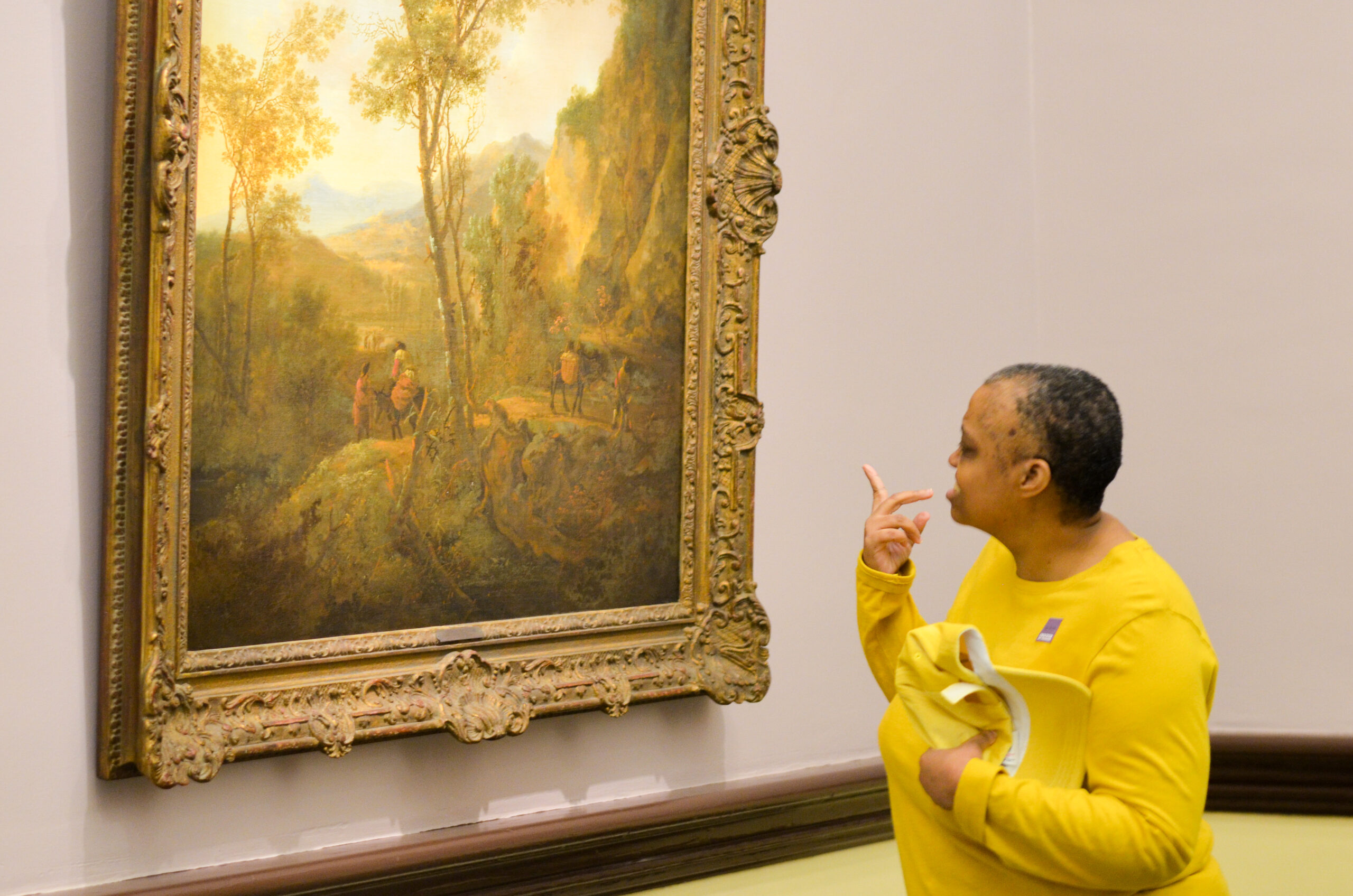
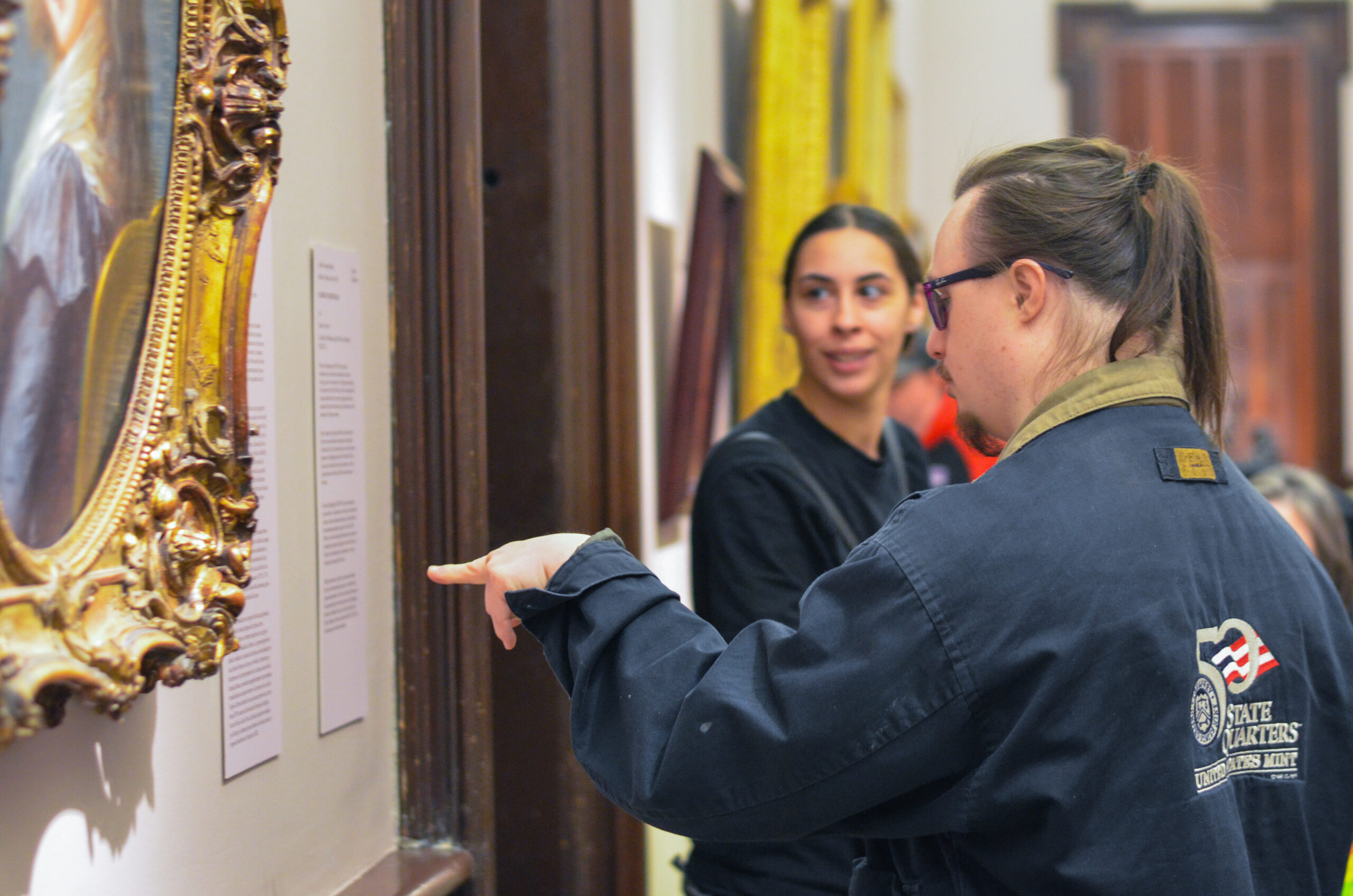
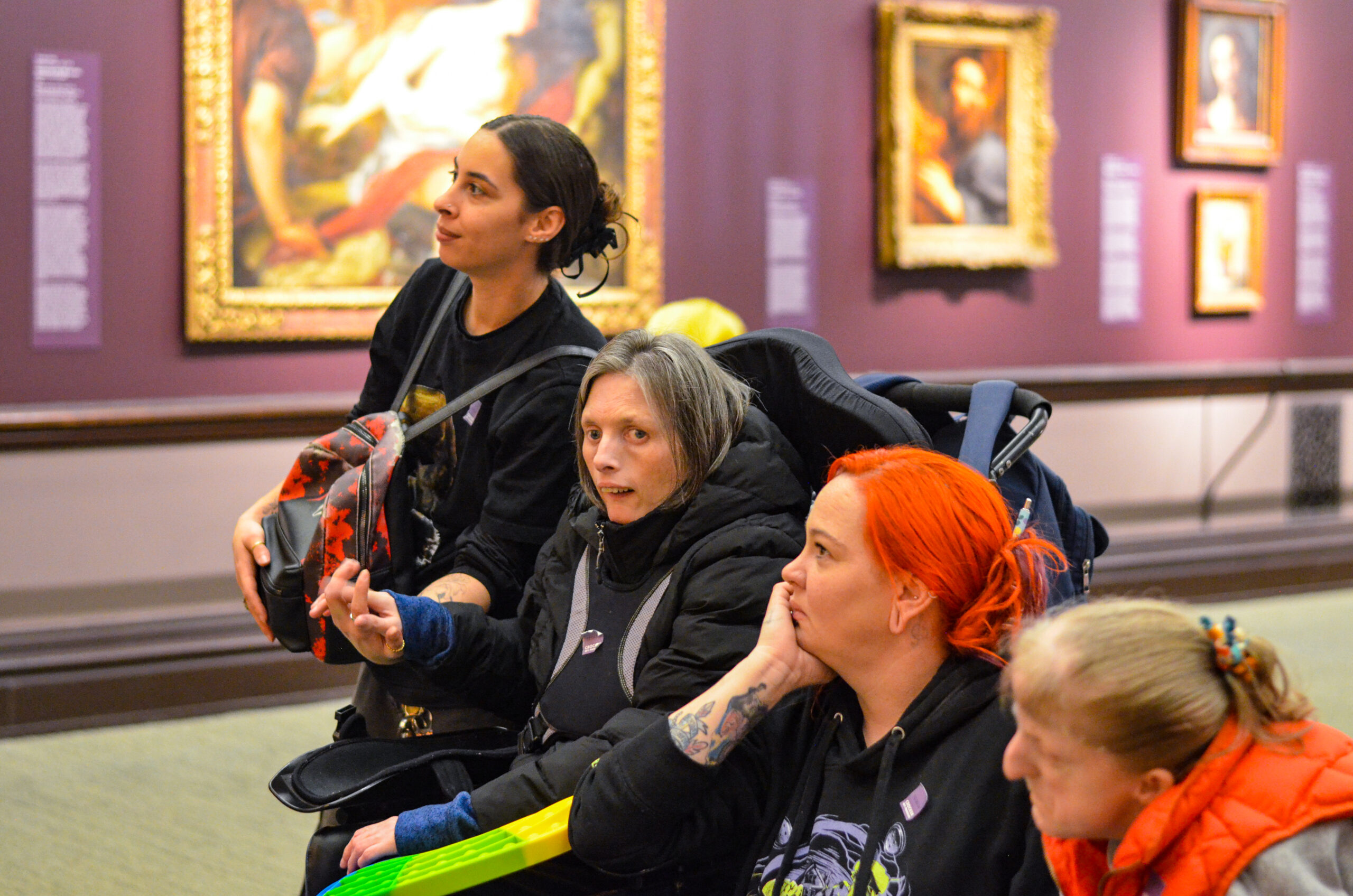
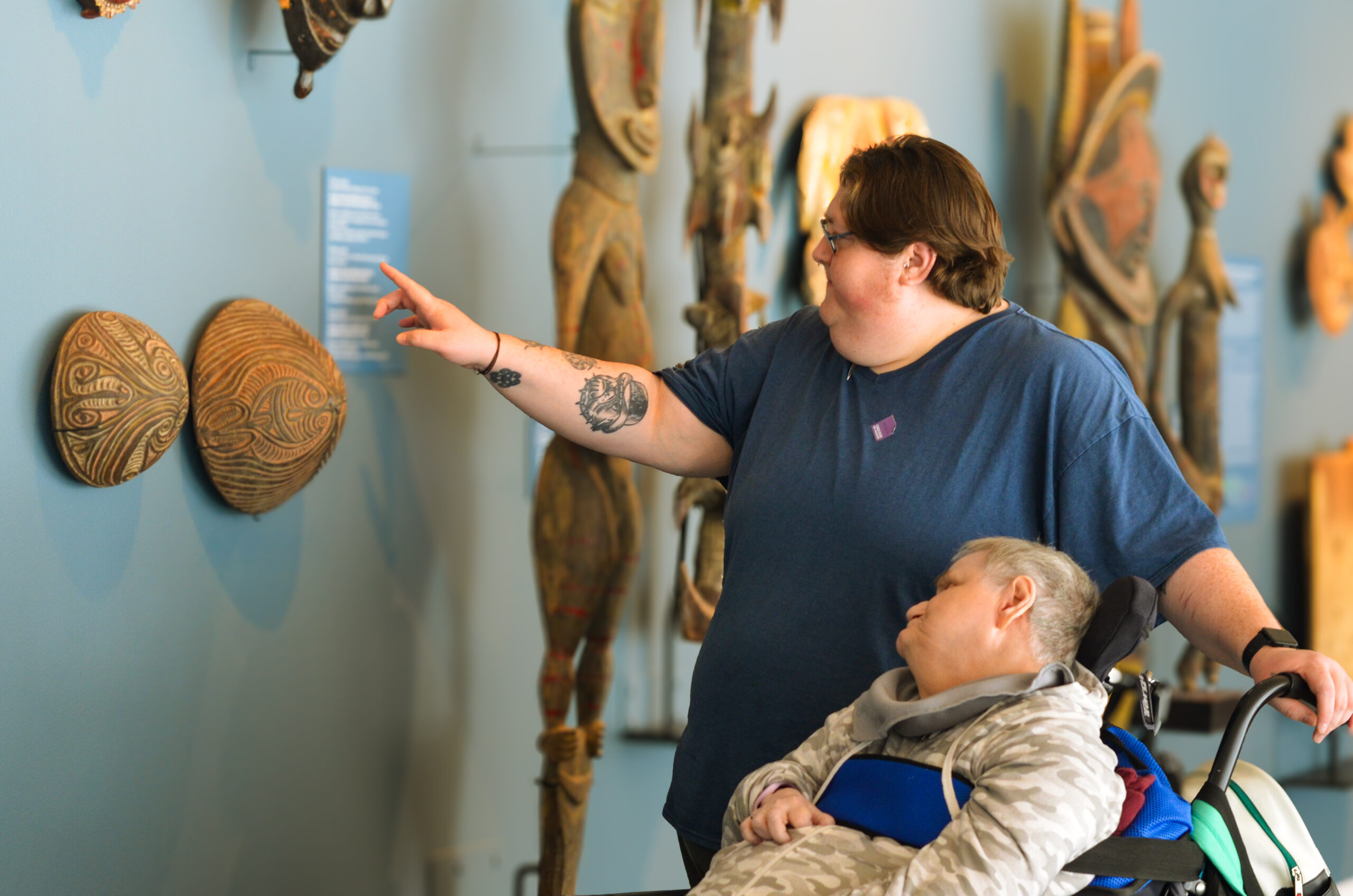
Art, history, and discovery came together during a recent visit to the Crocker Art Museum, where participants from UCP’s Adult Day Program spent the day exploring galleries and learning through creativity. Participants explored works from a vast array of eras and mediums. Each piece sparked discussion and reflection, allowing everyone to connect with the artwork in meaningful ways and see how artistic expression can reflect diverse cultures and histories.
One of the highlights of the visit was seeing how art from different periods could open doors to new knowledge. Pieces that addressed Native American heritage gave participants a visual and emotional entry point into understanding long-standing traditions and stories that are often overlooked in more traditional educational settings. Likewise, the exhibit “Making Moves”, inspired by the writings of feminist theorist bell hooks, encouraged conversations about gender, power, and social change. This exhibit even offered our participants the rare opportunity to view two original pieces by legendary Mexican painter Frida Kahlo that had been leant to the museum from a private collection.
The importance of outings like this goes beyond simply viewing art. Immersive experiences such as these can be immensely beneficial and enriching for individuals with developmental disabilities. A study on the correlations of motor skills and interpersonal communication from Queen’s University in Canada found that viewing and discussing art does more than just encourage cultural comprehension. Because art provides unique ways for understanding, it can expand motivation to learn and help coordinate sensory and motor behaviors that link communicative cooperation (Latif et al, 2014). For many of our participants, seeing and talking about art together helped foster communication, boost confidence, and spark creativity in ways that traditional day program setting might not. The museum setting encouraged everyone to slow down, observe, interpret, and share personal insights in a supportive group atmosphere.
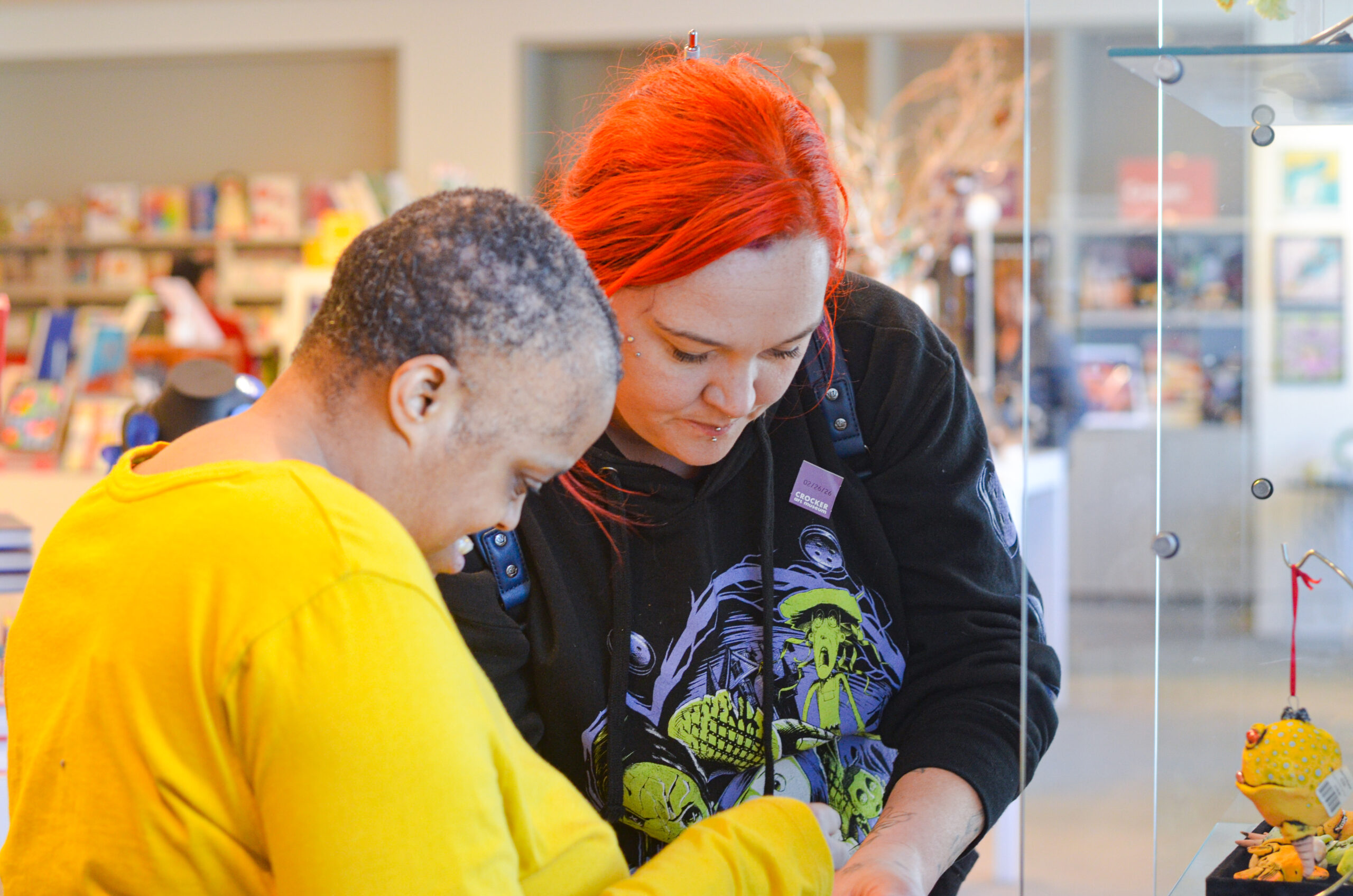
As the visit ended, the group headed to the museum’s gift shop which was a favorite part of the day for many. Participants who brought their own money had the opportunity to choose souvenirs that spoke to their personal tastes, with some even choosing to pick out gifts for their loved ones. Shopping independently not only extended the joy of the day but also reinforced practical skills like budgeting and decision-making in a real-world setting.
Overall, the trip to the Crocker Art Museum was more than just a cultural outing — it was a chance for people with intellectual disabilities to engage with art on their own terms, build social connections, and experience learning that is inclusive, empowering, and deeply human. Visiting art museums like this reminds us that art can bridge gaps, inspire questions, and enrich lives for people of all abilities.
Sources:
Latif N, Barbosa AV, Vatiokiotis-Bateson E, Castelhano MS, Munhall KG (2014) Movement Coordination during Conversation. PLoS ONE 9(8): e105036. https://doi.org/10.1371/journal.pone.0105036